
Surva is a festival for masquerade games

If you’re looking for one of Bulgaria’s most unique winter festivals, the Surva Festival in Pernik offers a dramatic mix of ancient ritual, colourful masks, and fire-lit processions at the end of January.

When winter’s chill is at its height and the new year is still young, a peculiar kind of magic takes hold in the shadowed mountains west of Sofia. It is here, in the town of Pernik, that the ancient, mysterious, and utterly theatrical Surva Festival gathers thousands to bring light, noise and colour to the darkest month. Part masquerade, part pagan ritual, Surva is a feast for the senses, a meeting of folklore, communal pride, artistry, and unrestrained celebration. If you travel seeking authenticity, ritual, spectacle and something unlike anything else in Europe, Surva demands a place on your list.

Surva Festival in Pernik is a street festival, and you do not need admission ticket. It happens on the central streets of the city of Pernik. It is FREE.

What is Surva? A Tradition of Masks, Bells, and Renewal

The roots of Surva are deep, tangled with the cycles of nature and ancient belief. Masked ritual games in Bulgaria stretch back through centuries, surviving through folk memory and practice even when empires rose and fell. Today, the Surva Festival in Pernik is a traditional masquerade where pagan rituals and Bulgarian folklore combine into a unique cultural phenomenon.

Traditionally, the masquerades occur between Christmas and Easter. They are performed during the “Dirty Days” (from Christmas until Epiphany), on Syrna Nedelya (Cheese Sunday), Todorova Nedelya (the Sunday before Lent), and notably around New Year. In the Western parts of Bulgaria, those who roam in masquerade around New Year are known as survakari; elsewhere in the country and in springtime, the custom is more often called kukeri.

Such rituals always carry similar hopes: that nature will awaken, that community and land will be fruitful, that people and animals will have health. The costumes, the masks, the steps, the clang of bells: all of this is symbolic. The masks guard against evil spirits; the bells amplify the protective power. The costumed men (traditionally only men, though women and children increasingly participate) dance, sing, call out blessings, move from house to house, and then gather in the centre of villages, in the central square of Pernik itself, to enact theatrical scenes, often a wedding ritual, sometimes parodies of social types, always with plenty of colour, noise and movement.

Back to Top

Why Go? The Festival Spectacle and Competition in Pernik

Surva in Pernik takes that tradition and makes it festival-scale. Organised since 1966 by the Municipality, with international status since 1985, Surva is now recognised both within Bulgaria and beyond as a major cultural fixture. Pernik joined the Federation of European Carnival Cities in 1995. In 2015 the Surova folk feast was inscribed on UNESCO’s Representative List of the Intangible Cultural Heritage of Humanity.

Over the years the scale has grown dramatically. In recent editions, over 10 000 participants come from across Bulgaria and abroad. Groups from Europe, Asia, even further afield bring their mask-making traditions, their performances, and their local styles of ritual.

The programme typically spans three days (Friday to Sunday) at the end of January. There’s a grand opening parade, often with torchlight and fire. The core of the festival is a series of processions, competitive displays of mask, costume and performance. Judging panels award prizes for best masks, best costume, best group performance.

The festival also features artisan markets, exhibitions, and food stands. Additionally, visitors can enjoy workshops on mask-making and folklore, offering a unique opportunity to immerse themselves in the community and its living rituals.

Back to Top

When Does it Happen?

The Surva Festival traditionally takes place in the final days of January, when Bulgaria is deep in winter and the air is crisp with the promise of renewal. The exact dates are usually announced several months in advance, allowing both local and international masquerade groups plenty of time to prepare their performances and elaborate costumes.

Traditionally, Surva is held on the last weekend of January. In recent years, the festival has stretched over an entire weekend, typically from Friday to Sunday. For instance, in 2024 it was held from 26 to 28 January, and in 2025 it was from 24 to 26 January.

Although it may be tempting to plan a spontaneous trip, Surva is one of Bulgaria’s biggest cultural events, drawing tens of thousands of visitors each year. Therefore, planning ahead is highly recommended. Specifically, planning early means you’ll have the best chance to secure accommodation and transport, and to explore the town before the crowds swell. Additionally, be prepared for the cold, daytime temperatures in January hover around freezing, and the evenings can be significantly colder, adding to the mystical atmosphere of the masked processions. The cold, however, is part of the experience. The shorter January days, the fires, the lights, the steam rising from breath and torches all contribute to Surva’s unforgettable winter magic.

Back to Top

Best Time to Arrive for the Festival

The festival typically begins on Friday evening with a ceremonial opening and torchlit parade that sets the tone for the days ahead. Arriving early allows you to settle in, get your bearings, and catch the quieter moments before the weekend crowds arrive.

Mornings tend to be calmer and are ideal for photography, while the afternoons bring the most vibrant parades and the loudest performances. Each day is a spectacle, with different groups taking turns to parade through the streets, accompanied by drums, songs, and rhythmic dancing.

By late afternoon, the air is thick with sound and excitement as groups compete for awards and recognition.

The energy builds towards the closing ceremonies on Sunday, when the streets of Pernik are filled with laughter, firelight, and fatewells until next year. For the most complete experience, try to spend the full weekend there.

Back to Top

What to Expect at Surva: See, Smell, and Hear

You hear a deep rumble first, the clanking of bells, heavy copper, goat or cow bells, tied around the waists of masked figures. Their costumes are made of animal skins, fur, carved wood, feathers, and fabric. They are filled with voices and joy. Their masks are bizarre, often frightening: fierce beasts, snarling animals, sometimes human-like but distorted, horns, tails, beaks, protruding teeth.

You will also see torches, fire displays, sometimes fireworks. Lights are everywhere and are part of the festival experience.

Groups move through the streets, stopping at houses, blessing them, singing, offering short performances. On the final days there are square performances where groups show off their dances, their ritual scenes (weddings, mock battles, shepherd-figures, priests, best men, best women, sometimes comedic parodies).

Surva is best enjoyed as a slow immersion, not a quick stop. Between the visual spectacle there are smells: wood smoke, roasting meat, mulled wine perhaps, winter air, hot drinks, the dust of costumes. It’s an immersive experience: visceral, loud, beautiful, overwhelming.

Back to Top

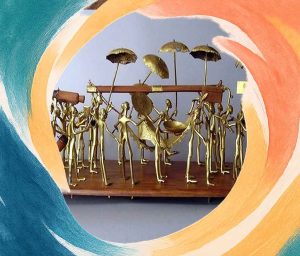
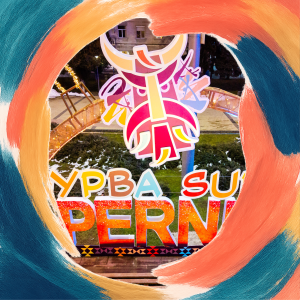
A collage of vibrant moments from the Surva Festival in Pernik: handmade masks and costumes worn by performers during the winter masquerade.

But Why? The Meaning Behind the Spectacle

Why do this? Why endure cold, the throngs of people, the noise, the logistics? Because Surva is more than entertainment. It is ritual, identity, community.

Every mask, every costume, every bell, every dance is part of a chain that ties modern people to ancient beliefs: the change of seasons, the turning of years, the wish for health, fertility, a good harvest, protection from evil. The festival is a living example of how traditions adapt. Nowadays there are foreign groups, women and children, new characters and parodies of modern themes, but the core remains. Its essence is renewal through noise and colour, through stepping out of ordinary life, through being both scared and exhilarated in that liminal time between old and new, darkness and light.

For locals, Surva is part of identity: each village, each group has its own mask-style, costume-style, performance style. Visiting it is like attending a gathering of these identities: you see the regional differences, the craftsmanship, the pride. For visitors, Surva offers a rare chance to see living folklore.

Back to Top

Where to Stay for Surva

Pernik is not a large city, its population is around 60,000. This makes finding accommodation during Surva an adventure. The festival draws thousands of participants and spectators, meaning hotel rooms, guesthouses, and short-term rentals are quickly booked up, often months in advance.

If you’re determined to stay in Pernik itself, you should plan early and expect higher-than-usual prices during the festival weekend. The advantage, however, is being at the heart of the celebration: waking up to the sound of bells, joining the festivities with locals, and feeling the rhythm of the community.

For a more comfortable and flexible stay, consider basing yourself in Sofia, which is only about 30 kilometres away. The Bulgarian capital offers a wide range of accommodation, from boutique hotels to serviced apartments. It also has excellent public transport or road connections to Pernik. Staying in Sofia also gives you access to its lively restaurants, cafés, and nightlife, allowing you to enjoy both the spectacle of Surva and the perks of the capital.

Back to Top

Getting to Pernik for Surva

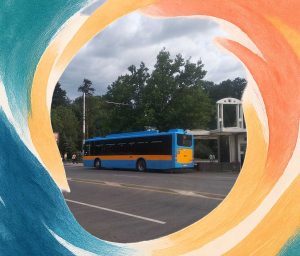
Reaching Pernik is relatively easy, and that convenience is part of its charm for visitors coming from Sofia or abroad. Public transport offers a practical and affordable alternative. Regular trains and buses connect Sofia’s central stations with Pernik throughout the day. The journey takes between 40 and 60 minutes.

By Car

The town lies roughly half an hour by car from the capital, connected by a modern motorway. That makes the trip quick and straightforward under normal conditions. However, during the festival, traffic can become quite heavy, so patience and good timing are recommended.

Keep in mind that parking can be challenging, and large parts of the city centre will be closed for the performers. Select a parking spot a little further from the city centre, and you should be fine.

By Bus from Sofia

When you travel by bus from Sofia, the best option is to catch the bus from its starting point. Speaking of this, its first stop is at the Bus Station Serdika (or Serdica) which is located next to the Central Railway Station. Be careful not to go to the Central Bus Station, which is right next to it. Bus Station Serdika was formerly known as the Traffic Market. There is a barrier and some signs but one can miss them. Here is a map to eliminate any confusion: https://maps.app.goo.gl/hcdYVq8FJ6XpjU2f9

Buses to Pernik have a sign with the destination in Bulgarian: “ПЕРНИК”.

The buses to Pernik have a few stops in the city of Sofia but securing your seat by hopping on the bus on the first station is better option, especially on festival day.

By train from Sofia

Trains are also a good option. In general, Bulgarian railways have a reputation for slow service and significant delays. However, Pernik is not a distant city and usually the trains from Sofia are keeping up to the schedule. To check the options by train, go to https://razpisanie.bdz.bg/en/sofia/pernik

For international visitors who land at Sofia Airport, there is no direct transport to Pernik. From the airport you can catch a bus or metro first. Then commute to the Central Railway Station or the Serdika Bus Station next to it respectively.

Once in Pernik, the festival venues are mostly concentrated around the city centre, so you can explore comfortably on foot. In fact, during Surva, certain streets are closed to traffic to allow processions to pass, making walking the best way to absorb the atmosphere.

Back to Top

Packing List for the Surva Festival in Pernik

Surva is an outdoor festival, and January in Western Bulgaria is not for the faint-hearted. Some winters are warmer than the others but dressing wisely is essential. Warm, layered clothing will make all the difference. Dress wisely, as daytime temperatures can hover around zero and evenings often dip below freezing.

A waterproof outer layer, sturdy boots, thick socks, and a hat or hood are must-haves. Additionally, gloves and scarves are equally important for keeping you comfortable as you watch the parades. Decathlon Bulgaria offers products of excellent value for money. For 5-15 EUR you can get quite decent pair of gloves, heating pads, hats or clothing. Unfortunately Decathlon’s huge well stocked stores are in the outskirts of Sofia but you can order online. You can have your order delivered to you, or use click&collect from their small shop in the city centre in Sofia. It is located on Alabin Str.

If you’re sensitive to noise, consider bringing earplugs because the symphony of bells, drums, and whistles can be exhilarating but overwhelming after a few hours.

Carry some cash, since many food and souvenir stalls don’t accept cards. And be sure to bring a fully charged camera or phone because the surreal costumes and fiery performances are wonderfully photogenic.

Back to Top

Can One Participate with a Costume in Surva Festival?

It is possible to participate in the Surva Festival in Pernik as a performer, but this requires some preparation. The competition at the Surva Festival in Pernik is open to groups in a few categories. Participants are judged on their tradition, artistry, and cultural authenticity for the prestigious Surva Mask award.

The application requirements and steps are published on Surva’s website; deadlines are usually set for December of the previous year. Due to the traditional focus of the festival, international groups are welcome but they perform outside the competition under specific conditions listed on the website.

While spontaneous participation might be impossible, there are still ways to deep-dive into the performances. There isn’t an official area for trying on costumes, but you may be allowed to try some of the performers’ amazing masks, capes, or accessories. Many are happy to let you try a cape or a mask. To do so, your best bet is to mingle with the performers. If you ask politely and share your dream of trying on a fluffy babuger costume, you might get lucky.

If one person declines, don’t be discouraged, just ask someone else.

Back to Top

Other Things to Do Nearby

While Surva is the main draw, Pernik and its surroundings offer plenty to explore before or after the festival. The town has a proud industrial heritage, reflected in its fascinating Underground Mining Museum, the only one of its kind in the Balkans.. It is set inside the galleries of a former mine.

History enthusiasts will also enjoy the ruins of the medieval Pernik Fortress, perched on a hill with panoramic views of the area, as well as the town’s Historical Museum.

For a change of pace, nearby spa towns such as Sapareva Banya or Kyustendil offer hot mineral springs perfect for relaxation after the cold festivities.

Sofia, just half an hour away, is full of restaurants, galleries, and cultural landmarks worth exploring.

If you’re in the mood for more winter adventure, the ski slopes of Vitosha Mountain are within easy reach, making Surva not just a festival, but a gateway to a broader Bulgarian winter escape.

Surva is loud. It’s over the top. It’s wildly unpredictable. But that is also why it matters. In an age when companies and influencers polish, package, and design everything for social media, the Surva Festival in Pernik offers something raw, communal, and elemental: bells, beasts, masks, fire, and ancient hope.

Back to Top

Learn more about the Kukeri tradition in Bulgaria and the Balkans in our our article about the Kukeri rituals in Bulgaria.

FAQ

What is Surva?

The Surva Festival in Pernik is an ancient Bulgarian tradition of elaborate masks and costumes. These masks are used to perform rituals that chase away evil spirits and welcome the new year.

Do I need a ticket for Surva?

No, the Surva Festival is a free street festival. It does not require a ticket for general admission for people to watch.

How cold is it in January in Pernik?

Based on official data, the average daytime temperature in Pernik during January is -2°C (28°F). While the crowds and energetic performances can create a warm atmosphere, prepare for a genuinely cold day.

Are the masks scary?

Expect a spectacular parade of fantastical, handcrafted masks. Artists craft these masks to scare away evil spirits. Their designs are more fantastical and artistic than genuinely frightening.

Is it suitable for children?

Yes, the festival suits children very well. The spectacle often fascinates them, and many performance groups even include young actors. However, for toddlers and very young children, the intense noise from the costumed performers can be overwhelming. Consider bringing ear protection or watching the festivities from a quieter, more distant spot. Earplugs are sold in pharmacies and drug stores.

Can I take photos of the performances or film them?

Yes, you can bring your cameras and take as many photos or videos as you like. You don’t need a special permission from the organisers to do so.

Back to Top

Back to Top

The Surva Festival in Pernik, Bulgaria, is a UNESCO-recognized winter spectacle of masquerade games and ancient pagan rituals. Held annually in late January, this massive street festival brings thousands of participants and visitors together to celebrate with elaborate handmade masks, vibrant costumes, and thunderous bells. Rooted in centuries-old traditions like Kukeri, the rituals are performed to chase away evil spirits and ensure a year of health, fertility, and good harvest. The event transforms the city into a vibrant, open-air theatre of folklore, where the line between performer and spectator blurs amidst fire-lit processions, rhythmic dancing, and communal joy. Experiencing the Surva Festival is a jump into the living Bulgarian culture.

Since you are here, check out some of the other unique festivals in Bulgaria:

# #Surva Festival Pernik, #UNESCO winter festivals Europe, #Bulgaria mask tradition, #kukeri, #Free things to do in Bulgaria winter, #Cultural travel, #Unique Festivals in Europe, #Mask Festival, #Day trip from Sofia, #Winter Festival in Bulgaria